
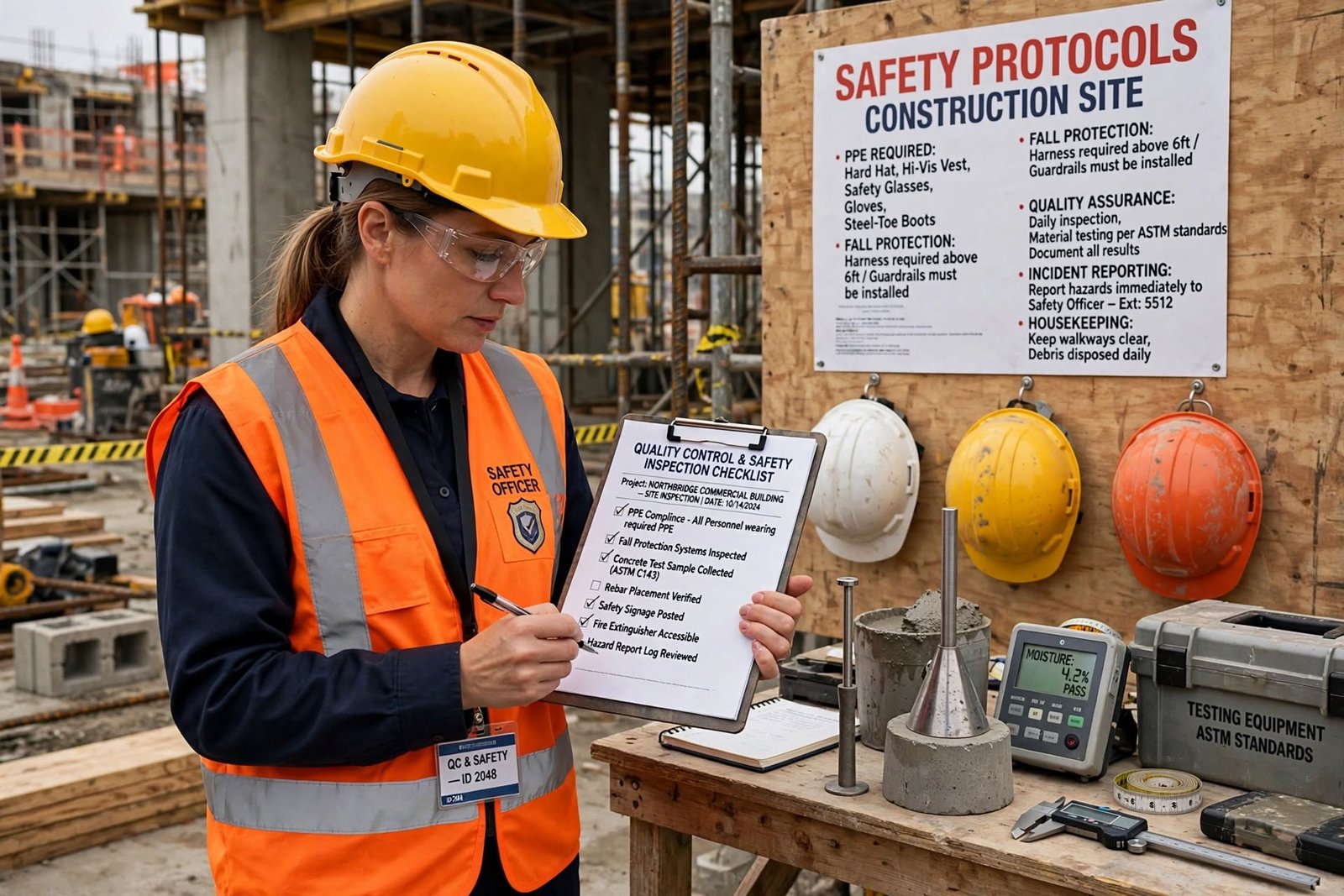
1. Introduction
Quality control and safety are two of the most critical aspects of construction management. Quality control ensures that structures meet design specifications and standards, while safety ensures that workers and the public are protected from accidents and hazards. Together, they define the professional standards of any construction project.
In India, construction is one of the largest employers and one of the most hazardous industries. The need for rigorous quality control and safety protocols cannot be overstated.
2. Quality Assurance vs Quality Control
2.1 Quality Assurance (QA)
QA is a proactive process focused on preventing defects by establishing systems, procedures, and standards. It is process-oriented and involves:
- Developing quality plans and standards
- Defining roles and responsibilities
- Training and competency development
- Establishing documented procedures
2.2 Quality Control (QC)
QC is a reactive process focused on detecting and correcting defects. It is product-oriented and involves:
- Testing and inspection
- Material verification
- Measurement and analysis
- Corrective and preventive actions
3. Quality Control Procedures
3.1 Material Inspection
All materials delivered to the site must be inspected and approved before use. This includes visual inspection, checking test certificates, and independent testing where required.
3.2 Workmanship Inspection
Regular inspection of ongoing work such as formwork, reinforcement, concrete placement, and finishing.
3.3 Testing
Conducting standard tests on materials and finished work as per Indian Standards.
3.4 Documentation
Maintaining quality records including test reports, inspection reports, and compliance certificates.
3.5 Non-Conformance Management
Identifying non-conforming work, documenting deviations, and taking corrective actions.
4. Testing Standards and Methods
4.1 Concrete Testing
- Slump test for workability
- Cube testing for compressive strength (7-day and 28-day)
- Non-destructive testing (rebound hammer, UPV)
- Core testing for existing structures
4.2 Steel Testing
- Tensile test for yield and ultimate strength
- Bend and rebend test
- Chemical composition analysis
4.3 Aggregate Testing
- Sieve analysis for grading
- Specific gravity and water absorption
- Crushing and impact values
4.4 Brick and Block Testing
- Compressive strength
- Water absorption
- Efflorescence
5. Site Safety Fundamentals
5.1 Safety Plan
Every construction site should have a documented safety plan covering hazards, procedures, responsibilities, and emergency response.
5.2 Safety Training
All workers should be trained on safe work practices, emergency procedures, and use of PPE.
5.3 Safety Inspections
Regular inspections of scaffolding, equipment, and work areas to identify and address hazards.
5.4 Incident Reporting
All accidents and near-misses should be reported, documented, and investigated.
6. Personal Protective Equipment (PPE)
PPE is the last line of defense against hazards. Essential PPE on construction sites includes:
- Safety Helmets: Protect against falling objects and head injuries
- Safety Shoes: Steel-toed boots protect against falling objects and punctures
- Safety Glasses: Protect eyes from dust, debris, and chemical splashes
- Gloves: Protect hands from cuts, abrasions, and chemicals
- High-Visibility Vests: Ensure visibility on site
- Safety Harnesses: For work at height
- Ear Protection: In high-noise areas
- Respirators: In dusty or chemically hazardous areas
7. Common Site Hazards and Prevention
- Falls from Height: Use of proper scaffolding, guardrails, and safety harnesses
- Struck by Falling Objects: Use of safety nets, toe boards, and hard hats
- Electrocution: Proper earthing, insulated tools, and lock-out-tag-out procedures
- Excavation Collapse: Proper shoring, benching, and slope stability
- Equipment Accidents: Regular maintenance, operator training, and safety guards
- Chemical Exposure: Proper storage, ventilation, and PPE
- Noise and Vibration: Hearing protection and equipment maintenance
- Fire and Explosions: Fire extinguishers, safe storage of flammable materials
8. Legal Framework for Safety in India
Key legal frameworks for construction safety in India include:
- Building and Other Construction Workers (Regulation of Employment and Conditions of Service) Act, 1996
- Building and Other Construction Workers Welfare Cess Act, 1996
- Factories Act, 1948
- Contract Labour (Regulation and Abolition) Act, 1970
- Employees' State Insurance Act, 1948
- Workmen's Compensation Act, 1923
- National Building Code of India (NBC)
- IS 3696: Safety Code for Scaffolds
- IS 3764: Safety Code for Excavation Work
9. Conclusion
Quality control and safety are not optional — they are fundamental to professional construction. Effective quality control prevents defects, rework, and long-term structural issues. Effective safety protocols protect lives, reduce costs, and improve morale and productivity.
At Construction Aid, we bring over 40 years of experience in quality control and safety management. Our team ensures that every project meets the highest standards of quality and safety.
Need Quality & Safety Consultation?
Get expert guidance on quality control, testing, and site safety from Construction Aid.
Schedule a Consultation